Jimmy Thesiger
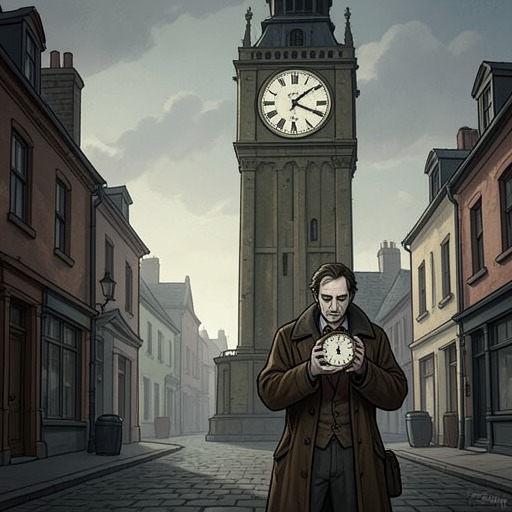
The Seven Dials MysteryJimmy Thesiger is introduced as a quick-moving, cheerful young man whose apparent harmlessness makes him easy to underestimate. That impression is central to his role in the mystery: the “amiable youth” who seems unserious is ultimately exposed as a calculating criminal responsible for two deaths.
Identity and Public Persona
At Chimneys, Jimmy comes racing down the main staircase two steps at a time and collides with Tredwell, who is carrying fresh coffee. Tredwell’s agility prevents an accident, while Jimmy’s hurried entrance establishes an energetic, informal manner. The moment is comic, but it also gives the reader an early version of the impression that will repeatedly obscure his true character.
The narration describes Jimmy as fair and cherubic, a look that makes Gerald Wade seem even more vacuous by comparison. Others place Jimmy among young men who appear to be amiable fools: Bundle describes him alongside Gerald and Ronald Devereux as an “ornamental excrescence.” Yet Jimmy’s own remark that he is “not nearly so much of an ass as I look” gives the apparent foolishness a sharper edge. The gap between his public image and his real capacities is not merely a mistaken judgment by others; it becomes a means by which he moves through the investigation without immediately attracting suspicion.
The contrast reaches its starkest form when Superintendent Battle explains how Jimmy stages a false attack at Wyvern Abbey. He knocks over tables, changes his voice, fires his Colt automatic at an imaginary assailant, and uses a small Mauser pistol to wound his own right arm. He then throws the Mauser out of the window, removes his glove with his teeth, and disposes of it in the fire. The elaborate performance turns his genial, unthreatening appearance into cover for deliberate violence.
Friendship, Suspicion, and the Investigation
Jimmy’s relationship with Ronald Devereux gives the deception its most intimate form. As the two friends drive together, Ronny tells Jimmy that he is perhaps his closest friend now. Jimmy answers gruffly, while the narration notes that Ronny’s manner puzzles him. The exchange presents a moment of trust, but leaves the crucial information withheld: Ronny begins to disclose something and then stops, saying that a promise prevents him from continuing.
After Ronny is shot, Jimmy tells Bundle and Loraine that this unfinished conversation took place on the day Gerald Wade died, when he was on his way to bring Loraine the news. Ronny had begun to tell him something, then remembered his obligation and broke off. Jimmy’s account makes him appear to be a confidant caught at the edge of a secret; retrospectively, that closeness sharpens the betrayal. The person Ronny trusted was also the person whose criminal identity Battle would ultimately connect to the murders.
Jimmy also helps shape the group’s theory of the case. He argues that Gerald, who worked at the Foreign Office, had only seemed like an amiable fool and was in fact a highly placed figure in the secret service. From this reading, Jimmy proposes that the Seven Dials affair is international rather than merely criminal, and that someone must join George Lomax’s house party. The insight is persuasive partly because it recognizes how an unassuming public manner can conceal a very different capacity—a pattern Jimmy embodies himself. His participation in the investigation therefore functions as misdirection: he helps others interpret appearances while keeping his own double life undiscovered.
The Clues That Undo Him
Battle later explains that he did not suspect Jimmy for a long time. The turning point was Ronny Devereux’s dying message: its apparent meaning was that the Seven Dials had killed him, but Battle recognized that Ronny wanted the Seven Dials told something about Jimmy. The friendship between the two men made that interpretation seem almost incredible. Yet it also recast their closeness as the very reason Ronny’s warning had carried such weight.
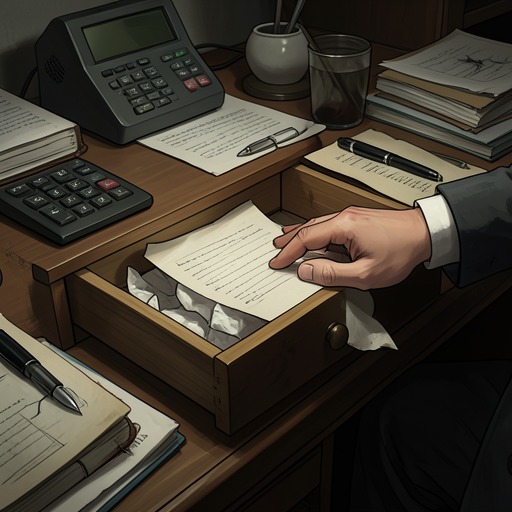
The case against Jimmy takes shape through access and money as well as the deaths. The stolen material required a culprit who knew the Foreign Office’s business, or was close enough to hear its internal talk. Jimmy’s social identity made that access plausible, while his modest inheritance sat uneasily beside his expensive way of life; Battle could not discover where the additional money came from. Gerald Wade, meanwhile, had become excited by a discovery and believed he was close to confirming his suspicions. He died at Chimneys, apparently from an overdose of sleeping draught, but Ronny rejected that explanation and believed the criminal was inside the house. Ronny came close to confiding in Jimmy, who was then still beyond his suspicion, but stopped short.
At Wyvern Abbey, Jimmy’s apparent injury and collapse offer Battle another puzzle rather than proof of innocence. The wound alone could not explain the faint, and Miss St. Maur’s recollection that Jimmy had stood so still after the lights went out that she thought he had left the room helped Battle reconstruct his movements. The supposed attack therefore concealed an absence: Jimmy could leave the room, reach Mr. O’Rourke’s papers by way of the ivy, and return before presenting himself as the victim of an intruder. The performance depended on others accepting its surface account, but its carefully staged details gave Battle grounds to test that account against what the witnesses had actually seen.
The trap closes when Battle identifies the apparent victim as the man behind the crimes. After the Seven Dials’ work brings the culprit within reach, Jimmy is arrested that afternoon. His exposure reverses the mystery’s governing appearances: the charming young man who had helped interpret the case had also used friendship, privileged knowledge, and the credibility of a staged attack to conceal his own role in it.
The False Front and the Final Reversal
The account of the decisive night briefly adopts Jimmy’s point of view, beginning after he has exchanged good-nights with Bill Eversleigh, whom the narration calls his fellow conspirator. Jimmy’s confident claim that he is less foolish than he looks now carries a double edge: he understands the value of his harmless appearance, but not the full extent to which the people around him are watching. Earlier, Bundle had asked how much she had told Bill, and Bill admitted that he knew everything while worrying that someone might be hurt. The novel thus lets Jimmy appear to move among accomplices even as the reader’s understanding of their loyalties remains incomplete.
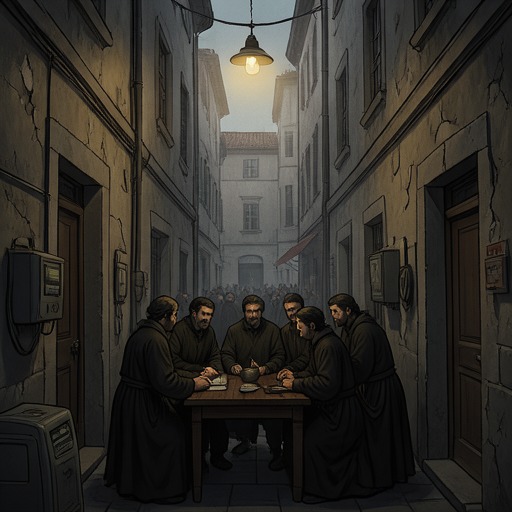
That uncertainty resolves when Superintendent Battle identifies Bill as No. 3 in the Seven Dials Society, a group of amateurs working for his department, and credits him with helping bring Jimmy to justice. Jimmy’s apparent partnership with Bill is therefore another unstable surface: Bill’s private allegiance is not to Jimmy’s criminal plans but to the operation that exposes them. The reversal completes the pattern that defines Jimmy’s role in the mystery. He has relied on others mistaking performance for character, but the investigation turns that same attention to appearances against him.